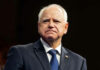
A California campus rocked by a $12 million harassment settlement is now poised to reward the president at the center of the controversy with a soft landing and a six‑figure paycheck.
Story Snapshot
- California State University will pay $12 million over gender harassment and retaliation claims tied to its San Bernardino campus.
- The president named in the lawsuit, Tomás Morales, is still considered “in good standing” and may keep about $655,000 in pay and benefits.
- Faculty and critics say a man accused of overseeing a hostile workplace for women should not be honored or financially rewarded.
- California State University denies wrongdoing, and there is no court ruling that Morales personally broke the law.
A costly harassment fight collides with a golden parachute
California State University agreed this year to pay $12 million to end gender harassment and retaliation claims brought by two former leaders at its San Bernardino campus. Those women, vice provost Clare Weber and associate dean Anissa Rogers, said campus leadership allowed a workplace culture that punished women who spoke up about unfair pay and mistreatment. Their lawsuit named President Tomás Morales, Dean Jake Zhu, and the university’s Board of Trustees, putting the top of the institution on the hook.
The public anger today is not only about what the women say happened. It is about how the system is treating Morales after paying out that kind of money. Reports say he is on track to receive a comfortable transition package and stay on the payroll, with salary and benefits in the range of the roughly $655,000 he made in 2024. Critics look at that number and see taxpayers and students funding a reward for failure, not a consequence for misconduct.
What the women say happened inside Cal State San Bernardino
Weber and Rogers did not just complain about rude coworkers. They alleged a pattern of discrimination and harassment against female employees, including unequal pay and retaliation when they raised concerns. Rogers told of reporting sexual harassment incidents and sexism to Dean Zhu, saying the university “needed to do better,” only to see her warnings brushed aside. Weber said Morales shrugged off her claim that she was the lowest‑paid vice provost in the system despite heavy duties.
The civil case did not fade away quietly. A Los Angeles jury found California State University liable for retaliating against Rogers and failing to stop harassment, awarding her $6 million in damages. The claims from Weber were headed for a second trial, but the university chose to settle, adding another $6 million and bringing the payout to $12 million. For many observers, a jury verdict plus a multimillion‑dollar settlement does not look like a routine workplace dust‑up. It looks like powerful people lost, badly.
How the system is treating Morales anyway
Despite all this, Morales is officially stepping down as president at the end of the 2025–26 academic year as if this were a normal retirement. The university still describes him as in “good standing,” a status that opens the door to a generous executive transition package and even an honorary “president emeritus” title. That label matters. It signals respect and gratitude. It also usually comes with perks like office space, influence, and sometimes extra pay.
Faculty and union voices at Cal State San Bernardino have long warned about Morales’ leadership, including a past no‑confidence vote over what they called a poisoned campus climate and top‑down decision‑making. Now, after the harassment lawsuits and giant payout, they are urging the system to withhold retirement benefits and honorary status, arguing that performance and character should matter. From a conservative, common‑sense view, it is hard to square a jury finding of retaliation and a $12 million settlement with the idea that this president deserves a victory lap.
Denials, missing facts, and the accountability gap
California State University formally denies wrongdoing in connection with the settlement, and the agreement itself does not admit legal fault. There is also no court ruling that Morales personally violated harassment or discrimination laws. The jury verdict hit the system, not him alone. That technical point gives defenders room to argue this is just a messy employment dispute, not proof that the president himself abused female staff.
But the public record has big holes. The system has not released the detailed transition agreement, the Board of Trustees’ action, or the criteria used to treat Morales as in good standing and eligible for emeritus status. There is no independent report clearing him of the women’s claims. So the picture most people see is simple: a campus where a jury backed a woman’s retaliation story, a second case cost millions, and yet the man at the top walks away with prestige and pay intact. For anyone who believes leadership should carry real responsibility, that feels upside‑down.
Sources:
nypost.com, yahoo.com, kvcr.org, sbsun.com, helmerfriedman.com, sbcsentinel.com