A quiet Pentagon restructuring could leave NATO with fewer American bombers, warships, and jets in a crisis—and put long-overdue pressure on Europe to finally carry its own weight.
Trump Administration Signals Hard Reset on NATO Dependence
Reporting based on a closed-door briefing in Brussels says U.S. envoy Alexander Velez-Green told allies the United States will sharply reduce combat power pre-committed to NATO for emergencies.[1][2] According to Der Spiegel’s account, fighter jets available to NATO would fall by roughly one-third, while strategic bombers would be cut by half compared with previous planning levels.[1][2] Three sources cited by Reuters described this as part of a broader message that Europe must prepare to rely less on automatic American reinforcements in a crisis.[1]
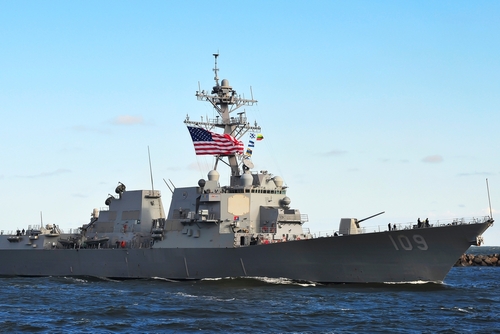
The same reports say the United States Navy will allocate fewer destroyers for NATO missions and will no longer designate any American submarines for NATO crisis use.[1][2] Mid-air refueling tankers and armed drones pledged to Alliance plans would also be scaled back, with Europe expected to field more of its own reconnaissance and strike-capable unmanned aircraft.[1][2] A NATO spokeswoman acknowledged there has been “over-reliance” on American assets in force planning, and said higher European and Canadian defense spending allows responsibilities to be reorganized.[1]
Burden-Sharing or Retreat? How Conservatives Should Read the Shift
For years, U.S. administrations of both parties have complained that American taxpayers bankroll a disproportionate share of NATO capabilities and common funding.[3] An Obama-era White House fact sheet openly noted that the United States covered about twenty-two percent of NATO’s shared budgets and around forty percent of the cost of the alliance’s airborne early warning fleet, even before Trump pressed Europe harder.[3] Analysts at institutions like Brookings have documented how many European members repeatedly cut defense spending after the Cold War, relying instead on U.S. conventional and nuclear power as their security cushion.
The Trump administration’s current reductions fit a predictable pattern where any American force posture adjustment in Europe is cast either as burden-sharing or as retreat. NATO’s own strategic concept stresses deterrence and crisis management, but also expects allies to strengthen their own militaries as the security environment worsens. From a conservative standpoint focused on limited government and fiscal sanity, requiring wealthy European nations to provide more of their own fighters, warships, and logistics aligns with long-standing complaints about unfair defense free-riding.[3]
Risks, Unknowns, and What Comes Next for U.S. Security
Critics warn that cutting highly visible assets like bombers, destroyers, and submarines could weaken deterrence if Moscow or other adversaries interpret the move as a U.S. pullback.[1] The evidence so far comes from media descriptions of a plan, not the underlying Pentagon orders or detailed cost-benefit analysis, so the public has not seen how Washington assessed the risks or what backup capabilities remain.[1] Commentators note that reductions of this scale go beyond symbolism and could materially alter NATO’s first-response punch if Europe does not rapidly fill the gap.
Another open question is how coordinated this shift has been within NATO’s political leadership.[2] Reporting does not yet show formal North Atlantic Council decisions or a clear record of allied consultation, which fuels European fears of unilateral U.S. action shaped by domestic politics.[2] At the same time, the United States continues to provide the nuclear umbrella and the largest single defense budget in the alliance, suggesting Washington is trying to restructure—not abandon—its role.[3] For American conservatives, the key test will be whether these cuts genuinely strengthen U.S. security and sovereignty, or whether they risk inviting miscalculation abroad while Congress still struggles to rein in spending at home.
Trump administration plans to significantly reduce US military contributions to NATO. Europe is being told to step up fast. What’s really behind this move?
According to reports, the US has informed NATO allies that it will sharply cut the pool of military assets available to… pic.twitter.com/9yt1rwCH0S— Behind The Headlines with Shaw Bester (@BTH_with_Shaw) May 27, 2026
Looking ahead, the most important unanswered issues concern timelines and accountability for European allies.[1] Independent analysts have suggested conducting a detailed audit of European air, naval, submarine, and logistics capacity to determine how quickly those forces can backfill reduced U.S. contributions. If Europe truly steps up—buying more jets, building more ships, and funding serious readiness—American taxpayers could finally see relief from decades of one-sided commitments.[3] If not, these changes could become another example of Washington’s political class gambling with deterrence while ordinary citizens shoulder the risk.
Sources:
[1] Web – Report: U.S. To Cut Strategic Bombers and Warships Available to NATO
[2] Web – US to Cut Military Assets for NATO, Spiegel Reports | KuCoin
[3] YouTube – Pentagon Announces US Will Cut Thousands Of Troops In Europe