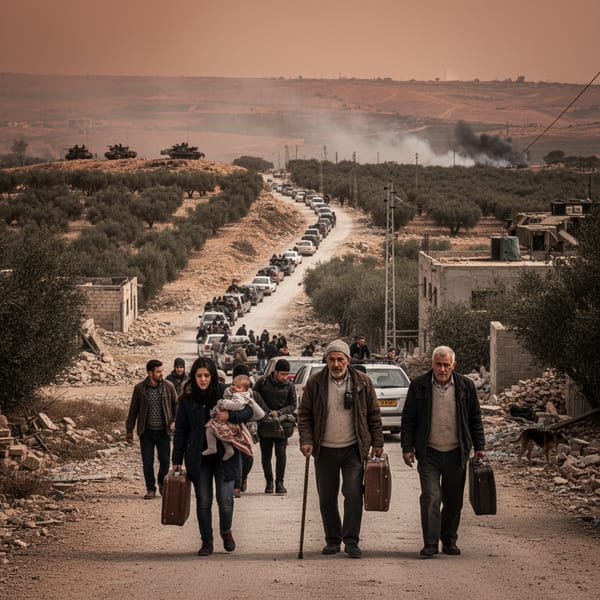
Israel’s military has ordered forced evacuations of 12 towns across southern Lebanon and the Bekaa Valley amid expanding air strikes, shattering a fragile ceasefire and pushing the region toward broader conflict with Hezbollah militants.
Ceasefire COLLAPSES as Military Operations Expand
The Israeli Defense Forces issued mandatory evacuation orders for residents in targeted Lebanese communities as air strikes intensified throughout the region. Military operations began with ground incursions in March 2026 following months of escalating hostilities with Hezbollah. Despite a ceasefire agreement brokered by the United States in April, violations have become routine. Israel maintains its actions constitute legitimate self-defense while Hezbollah continues cross-border attacks, creating a dangerous cycle of retaliation.

The forced displacements now extend well beyond the initial buffer zone established under the ceasefire terms, raising serious concerns about regional stability. Israeli officials assert they are responding to ongoing security threats, but the expansion represents a significant escalation in military strategy. The situation has created thousands of displaced civilians caught between military forces, with humanitarian organizations warning of a deepening crisis.
Prediction Markets Signal Airspace Closure Fears
Financial prediction markets are reflecting growing anxiety about the conflict’s trajectory. Markets tracking potential Israeli airspace closures show increased probability, with May 31 odds jumping to 26 percent. Meanwhile, markets betting on Israeli withdrawal from Lebanon have dropped significantly, with June 30 odds falling to just 7.5 percent. These market movements suggest investors and analysts anticipate prolonged military engagement rather than de-escalation.
Regional Destabilization Threatens Broader Consequences
The expanding conflict carries implications far beyond Lebanon’s borders. American interests in the region face increased uncertainty as the ceasefire framework collapses. Military analysts point to the situation as evidence that diplomatic agreements without enforcement mechanisms fail to prevent determined adversaries from pursuing military objectives. The cycle of attacks and counter-attacks demonstrates the limitations of brokered peace deals when fundamental security concerns remain unresolved. Observers are monitoring statements from Israeli defense officials for indicators of potential airspace restrictions or further military expansion that could draw additional regional actors into the conflict.