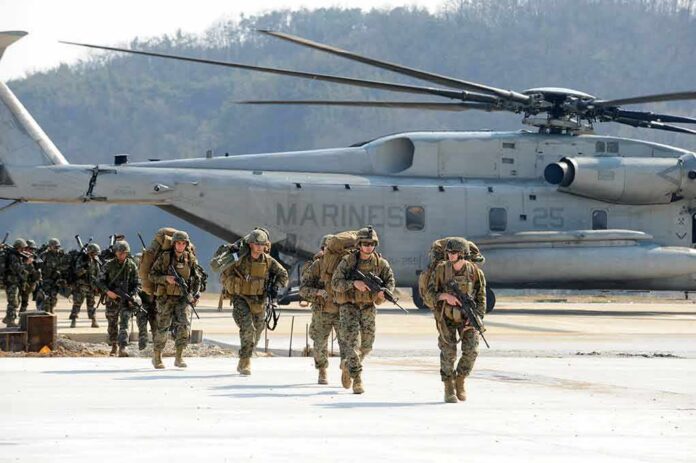
Explosions and interceptor fire lit up the night sky over Erbil as hostile drones and missiles targeted a US base and consulate complex, underscoring how quickly the fight between America and Iran is now reaching our troops on the ground.
Story Snapshot
- Multiple explosions and air-defense bursts were reported near a US base and consulate in Erbil, Iraq, as incoming drones and missiles were engaged.
- Local security forces say coalition air defenses intercepted and destroyed several missiles and drones over Erbil province, preventing an even worse outcome.
- Iranian and Iran-backed groups publicly claim drone and rocket strikes on US facilities near Erbil airport as part of wider retaliation against America and its allies.
- Conflicting early reports and a lack of US and Iraqi official detail leave questions about damage, casualties, and exact targets, even as the risk to American forces clearly rises.
Explosions and Interceptors Near US Base and Consulate
Reporters on the ground in Erbil describe a tense and chaotic scene as at least seven explosions were heard near a military base hosting United States-led coalition forces and close to the American consulate complex. Journalists from Agence France-Presse and the Associated Press saw air defense systems activate before the blasts, with drones hovering above the city and black smoke rising near Erbil airport, where US troops are stationed. Loud bangs shook neighborhoods, and people watched tracer fire arc into the night as systems tried to stop incoming threats.
Regional outlets report that air defense systems around Erbil International Airport intercepted suicide drones aimed at the facility, neutralizing them before impact. A security source told Shafaq News that four loud explosions were heard near the US consulate, and the Kurdistan Region’s Counter-Terrorism Service later confirmed that the US-led coalition intercepted and destroyed several missiles and drones over Erbil province. Video segments and eyewitness accounts match this picture of interceptor fire followed by blasts in the sky and smoke rising near key American sites.
Iranian and Militia Claims of Strikes on US Facilities
Iranian state media and aligned groups openly frame these incidents as part of a wider campaign against American forces. Iranian outlets said a US base in Iraq’s Kurdistan region was targeted, while Anadolu Agency reported blasts at Erbil airport amid claims of an Iranian strike. A small Iran-aligned Iraqi group was reported to have claimed responsibility for drone attacks in the area, and another Iran-backed faction, Saraya Awliya Al Dam, said it struck the US base in Erbil with drones, hitting what appeared to be an ammunition depot near the airport.
Separate militia statements under the “Islamic Resistance” banner claimed exploding drone and rocket attacks on American bases in Irbil, describing them as retaliation for US and Israeli strikes that killed Iran’s Supreme Leader Ali Khamenei and hammered Iranian territory. Other regional reports describe kamikaze drone strikes, secondary explosions and fires inside logistics or ammunition areas, and smoke rising from inside US facilities near Erbil. While casualty numbers remain unclear, the message from Tehran-linked groups is direct: they see US bases in Iraq, including Erbil, as fair targets in a broader war.
Escalation Pattern and Gaps in Official Information
These fresh attacks fit an unsettling pattern that many conservative readers will recognize: short-range drone and rocket strikes near US bases in Iraq first surface through local reports, social media clips, and regional outlets, long before any clear official statement arrives. Shafaq News openly noted that it was “unclear” whether the Erbil blasts came from missile strikes or coalition air-defense interceptions, and that authorities did not comment at first. Anadolu and other outlets similarly highlighted the lack of immediate US or Iraqi confirmation, even as residents were hearing explosions and seeing smoke.
The Kurdish region around Erbil has seen repeated attacks on or near the airport, the US consulate, and coalition facilities for years, including the 2021 rocket strike that hit the coalition base and killed two people while injuring several others. Recent coverage now often folds these new Erbil blasts into a larger narrative of Iranian missile and drone campaigns hitting bases in Bahrain, Jordan, Kuwait, and Qatar that host American troops. That big-picture framing can make it hard for ordinary Americans to sort out which explosions are drills, which are intercepted threats, and which are successful hits on our forces and diplomatic posts.
What This Means for US Forces, Policy, and Voters at Home
For President Trump and his administration, these events are not abstract headlines; they are direct tests of American resolve and protection of our people overseas. US-led coalition defenses around Erbil did their job in many cases, shooting down drones and missiles before they could hit home. But the growing number of attempts means the margin for error is shrinking. Each successful intercept still reminds us that enemy weapons are reaching the edge of our bases and consulate walls.
Drone crash near Erbil airport; explosions reported near US basehttps://t.co/q7rvD0ECB3
— Ketan (@ketan72) July 24, 2026
For readers at home who care deeply about strong national defense and limited, clear missions abroad, the picture is mixed. On one hand, Patriot batteries, C-RAM guns, and other systems are firing as designed, proving that America can still defend its troops. On the other hand, the lack of straightforward, timely statements from Washington and Baghdad leaves families and taxpayers guessing about what is really happening to our service members. With Iran and its militias boasting about strikes, conservatives will rightly demand honest reporting, firm responses when Americans are targeted, and a foreign policy that does not leave our bases under constant drone and rocket fire without a clear endgame.
Sources:
military.com, middleeasteye.net, en.yenisafak.com, shafaq.com, aljazeera.com, en.wikipedia.org, caspianpost.com, timesofisrael.com, youtube.com, cnn.com, thenationalnews.com, facebook.com, aa.com.tr