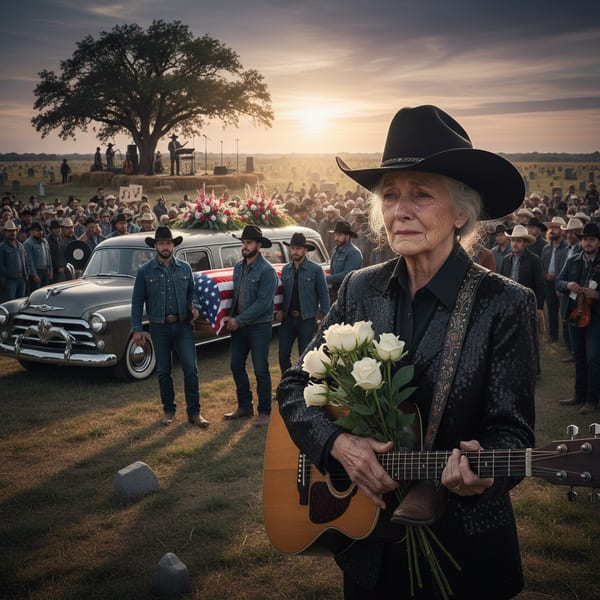
David Allan Coe, the outlaw country pioneer who wrote Johnny Paycheck’s hit “Take This Job and Shove It” and collaborated with metal legend Dimebag Darrell, died at age 86, leaving behind a controversial legacy that bridged honky-tonk bars and heavy metal stages.
From Reform School to Country Music Icon
Born in Akron, Ohio, Coe’s early life reflected the hardscrabble American story of overcoming adversity. Placed in reform schools at age nine due to a violent home life with an alcoholic father, Coe spent much of his youth behind bars. Those experiences shaped his tough persona and refusal to smile or soften his image for mainstream acceptance. Despite 35 years as a Country Music Association member, he never received an invitation to present at their awards show, a snub that highlighted Nashville’s unease with his uncompromising style.
Coe stood alongside Waylon Jennings and Willie Nelson as an outlaw country pioneer, scoring jukebox hits with “You Never Even Called Me by My Name” and the poetic 1983 track “The Ride.” His songwriting talents extended beyond his own performances. When Johnny Paycheck turned his composition into a chart-topper without proper recognition, Coe recorded his own version in 1980 as a country diss track. The Dead Kennedys later covered the song, proving Coe’s writing resonated far beyond country music’s traditional boundaries.
Unlikely Collaborations That Shaped Rock History
Pantera guitarist Dimebag Darrell called Coe the country equivalent of heavy metal, praising their friendship that led to an unexpected collaboration. After meeting backstage and bonding over a Pantera home video, Dimebag received a phone call from Coe, who had just won fifty thousand dollars on a slot machine and wanted the metal guitarist on his next record. They tracked eight songs for a metal-country crossover album at Dimebag’s house, though their love of partying stretched the sessions throughout an entire summer.
Warren Haynes, future Allman Brothers Band and Gov’t Mule guitarist, got his first professional break touring with Coe. Haynes described the experience as “frightening,” navigating a world of bikers and chaos he had never encountered. Despite the challenges, Haynes credited those tours as invaluable learning experiences. Coe also facilitated Haynes’ introduction to Dickey Betts and Gregg Allman, directly influencing the trajectory of Southern rock history. The connections forged through Coe’s network demonstrated his significant, though often overlooked, impact on American music beyond country’s traditional boundaries.
A Complex American Legacy
Coe faced accusations of racism throughout his career, stemming from offensive lyrics he defended by arguing context mattered. His refusal to apologize or conform to mainstream expectations kept him on the outskirts of Nashville’s establishment, even as his songwriting influenced generations of musicians across multiple genres. His death closes a chapter on outlaw country’s most uncompromising voice, an artist who valued authenticity and freedom of expression over commercial acceptance or political correctness.